Honeypots
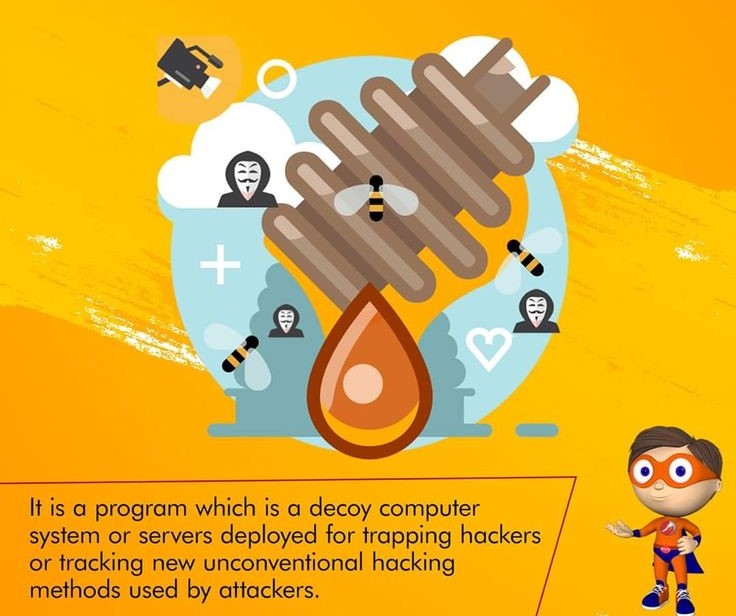
What is a Honeypot?
A security tool called a honeypot sets up a virtual trap to entice intruders. Attackers can take advantage of flaws in purposefully compromised computer systems, which you can examine to strengthen your security protocols. A honeypot can be used on any type of computing resource, including routers, file servers, software, and networks.
A kind of deception device called a honeypot lets you identify patterns in the behavior of attackers. Security teams can utilize honeypots to look into cybersecurity breaches and gather information about the methods used by cybercriminals. Compared to typical cybersecurity measures, they also lessen the chance of false positives because they are unlikely to draw in real activities.
Types of Honeypot Deployments
Honeypots can be deployed in various ways, depending on the organization's objectives, resources, and security requirements. The deployment of honeypots can generally be categorized into three main types:
1. Production Honeypots:
- Low-Interaction Honeypots: These honeypots simulate only basic services or protocols, such as web servers, FTP servers, or email servers, to attract attackers. They provide limited interaction with attackers, typically logging basic information about connection attempts, reconnaissance activities, and exploit attempts. Low-interaction honeypots are relatively easy to deploy and maintain but offer limited insight into attackers' behaviors and intentions.
- High-Interaction Honeypots: High-interaction honeypots emulate complete operating systems and services, providing attackers with a realistic environment to interact with. These honeypots capture detailed information about attackers' techniques, tools, and motivations, allowing security teams to gain deeper insights into their behaviors. While high-interaction honeypots require more resources to deploy and maintain, they offer greater value in terms of threat intelligence and forensic analysis.
2. Research Honeypots:
- Client-Side Honeypots: These honeypots simulate vulnerable client applications or environments, such as web browsers, email clients, or file-sharing applications, to attract attacks targeting end-user devices. Client-side honeypots help researchers understand how attackers exploit client-side vulnerabilities to deliver malware or compromise systems.
- Network Honeypots: Network honeypots mimic entire networks or subnets, allowing researchers to study attacks targeting multiple systems or services simultaneously. Network honeypots capture network traffic, analyze attack patterns, and identify trends across different attack vectors, providing a comprehensive view of cyber threats.
3. Hybrid Honeypots:
- Hybrid honeypots combine elements of both production and research honeypots to achieve specific objectives. For example, a hybrid honeypot might emulate a production environment to attract attackers while also collecting detailed forensic data and conducting in-depth analysis of their activities. Hybrid honeypots offer flexibility and customization options, allowing organizations to tailor their deployments to meet their unique security requirements and objectives. Overall, the choice of honeypot deployment depends on factors such as the organization's goals, technical capabilities, and risk tolerance. By selecting the appropriate type of honeypot deployment and implementing effective monitoring and analysis processes, organizations can enhance their ability to detect, analyze, and respond to cyber threats effectively.
Honeynet: A network of Honeypot

A network of honeypots, also known as a honeynet, is a collection of interconnected honeypots deployed across an organization's network to detect, analyze, and respond to cyber threats comprehensively. By strategically distributing honeypots throughout different segments of the network, organizations can gain a holistic view of attackers' behaviors, tactics, and techniques across various attack vectors.
A network of honeypots typically consists of a combination of low-interaction and high-interaction honeypots, each serving different purposes. Low-interaction honeypots are deployed in areas of the network where attackers are likely to perform automated scans or reconnaissance activities, such as internet-facing servers or perimeter defenses. These honeypots simulate basic services or protocols to attract and intercept scanning activities, providing early warning indicators of potential threats.
In contrast, high-interaction honeypots are deployed in critical or high-value areas of the network, such as internal servers or sensitive data repositories. These honeypots emulate complete operating systems and services, providing attackers with realistic environments to interact with. High-interaction honeypots capture detailed information about attackers' actions, including exploit attempts, lateral movement, and data exfiltration, allowing security teams to gain deeper insights into their behaviors and intentions.
By deploying a network of honeypots, organizations can achieve several benefits. Firstly, they gain early visibility into emerging threats and attack trends across their network, enabling them to take proactive measures to mitigate risks before they escalate. Secondly, honeypots serve as decoys, diverting attackers' attention away from legitimate systems and data, thereby reducing the likelihood of successful attacks. Additionally, honeypots provide valuable threat intelligence and forensic data that can be used to enhance incident response processes, improve security controls, and inform future security investments.
However, deploying and managing a network of honeypots requires careful planning, resources, and expertise. Organizations must consider factors such as honeypot placement, configuration, and monitoring to ensure optimal effectiveness and minimize the risk of unintended consequences. Moreover, ongoing maintenance and analysis of honeypot data are essential to maximize their value and derive actionable insights from the information collected. By leveraging a network of honeypots as part of a comprehensive cybersecurity strategy, organizations can enhance their ability to detect, analyze, and respond to cyber threats effectively, ultimately strengthening their overall security posture and resilience against evolving threats.